India’s food industry is witnessing a growing shift toward natural, clean-label, and traditional food products. Consumers today are increasingly questioning what goes into their food — from refined sugar and palm oil to preservatives and artificial additives.
Many startups are attempting to rebuild trust in the food ecosystem. But turning a noble mission into a scalable FMCG brand requires much more than a good story.
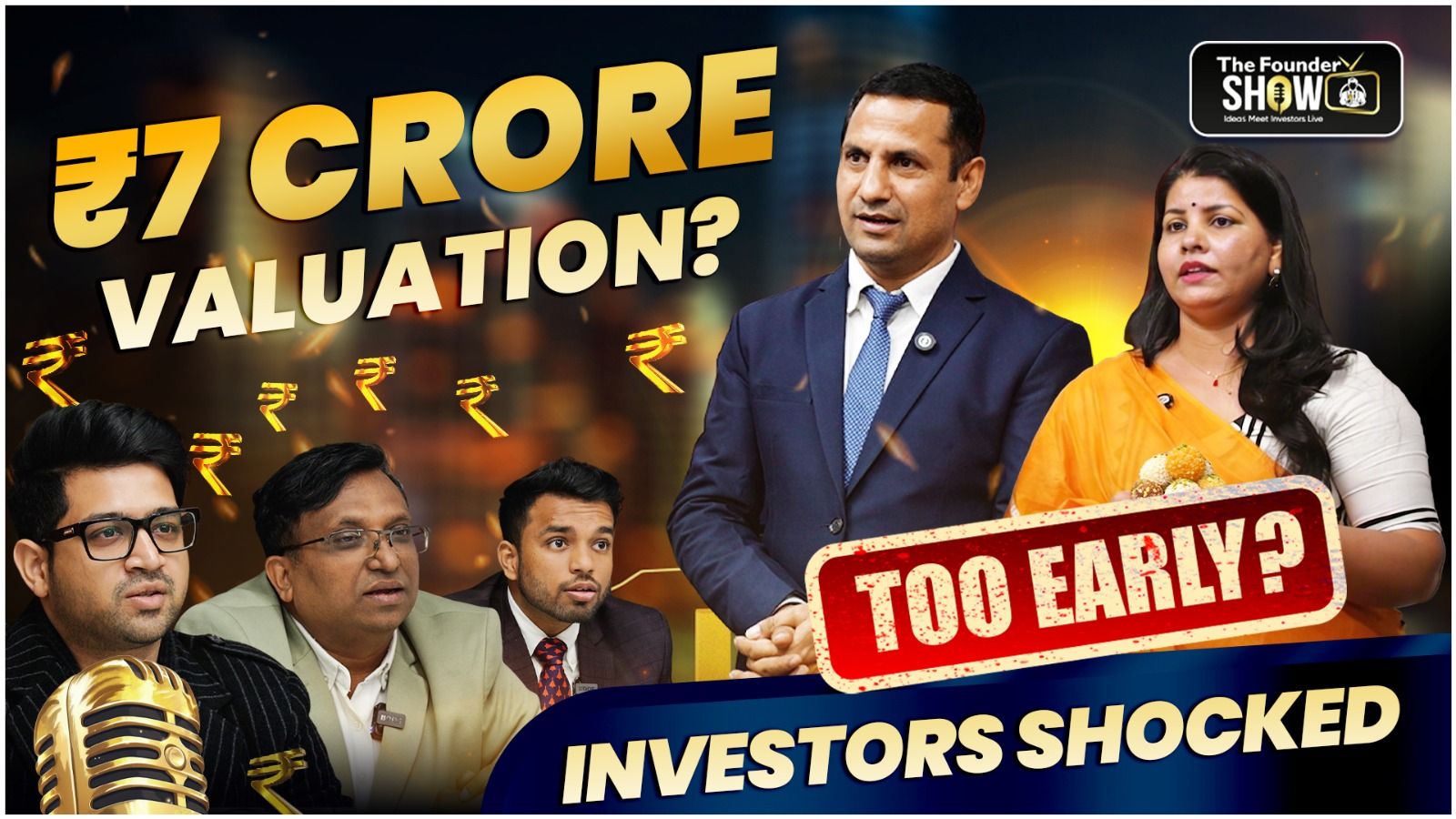
In Founder Show Season 1 – Episode 2, the founders of Shree Shuddh Desi stepped into the room with a mission to restore purity, trust, and tradition in Indian food. What followed was a deep investor discussion on business fundamentals, product differentiation, valuation logic, and brand scalability.
The episode ultimately became a real-world case study of what makes a food startup investable.
Shree Shuddh Desi is a women-led, farmer-integrated food brand focused on producing traditional Indian sweets, snacks, and staple products using natural ingredients and chemical-free methods.
The brand positions itself as a response to today’s processed food ecosystem, where many products contain refined sugar, palm oil, preservatives, and artificial additives.
Startup Profile:
View Shree Shuddh Desi Profile
The founders aim to rebuild the traditional Indian food ecosystem through:
Their product categories include:
The brand avoids refined sugar and palm oil, instead using ingredients such as jaggery, khandsari sugar, honey, and natural sweeteners sourced directly from farmers.
During the episode, founders Jyoti Tyagi and Vivek Tyagi presented their startup traction and business model.
Key highlights included:
The founders came to the show seeking:
50 Lakhs for 7% equity
The funds were intended for:
However, as the conversation progressed, investors began evaluating the startup beyond the mission and into deeper business fundamentals.
The episode featured a panel of experienced investors who examined the startup through the lens of scalability, governance, and business discipline.
Investor Panel
Aashish Tripaathi: Angel Investor | Backing visionary founders to build tomorrow’s market-leaders.
Bhavik Agarwal: Angel Investor | Tech Innovation Partner and guiding founders towards technology
Swapnil Pandey: Angel Investor | Investing in early-stage startups and guiding founders towards sustainable growth.
These investors did not just evaluate the product taste or the emotional narrative behind the brand. They examined:
The startup reported an annual revenue of 35 lakh. However, investors wanted deeper clarity on how the revenue was generated.
The founders explained their revenue distribution:
This created an important strategic concern. If a large portion of revenue comes from white labeling for other brands, the startup may not yet be building a strong independent consumer brand.
The most intense discussion in the episode revolved around the startup’s 7 crore valuation.
Given the current numbers:
Investors questioned how the valuation was justified.
They also raised concerns about early-stage salary withdrawals and suggested that founders should focus on reinvesting profits into product development and distribution growth.
Even though the investors declined the deal, they provided important guidance for the founders.
Without clear positioning, consumer recall remains weak.
After detailed evaluation, all investors decided not to invest in the startup at this stage.
The key reasons included:
However, the investors encouraged the founders to refine their strategy and return once the business achieves stronger structure and market clarity.
To understand the complete investor discussion and founder evaluation, watch the full episode here:
Watch Founder Show Season 1 Episode 2
If you are a startup founder preparing for fundraising, mentorship, or investor readiness, The Founder Show gives you the opportunity to present your startup before experienced investors.
The platform focuses on real startup evaluation — helping founders build structured, scalable, and investor-ready businesses.
Apply now and take the next step in your startup journey.