Raising funds for a startup is a critical step that can define the trajectory of a business. Many founders rush to seek investment without fully understanding whether their startup is ready, leading to rejections and lost opportunities. Structured evaluation ensures that startups are prepared, credible, and attractive to investors.
This blog explores why structured evaluation is essential, how it benefits startups, and the key areas founders should assess before approaching investors.
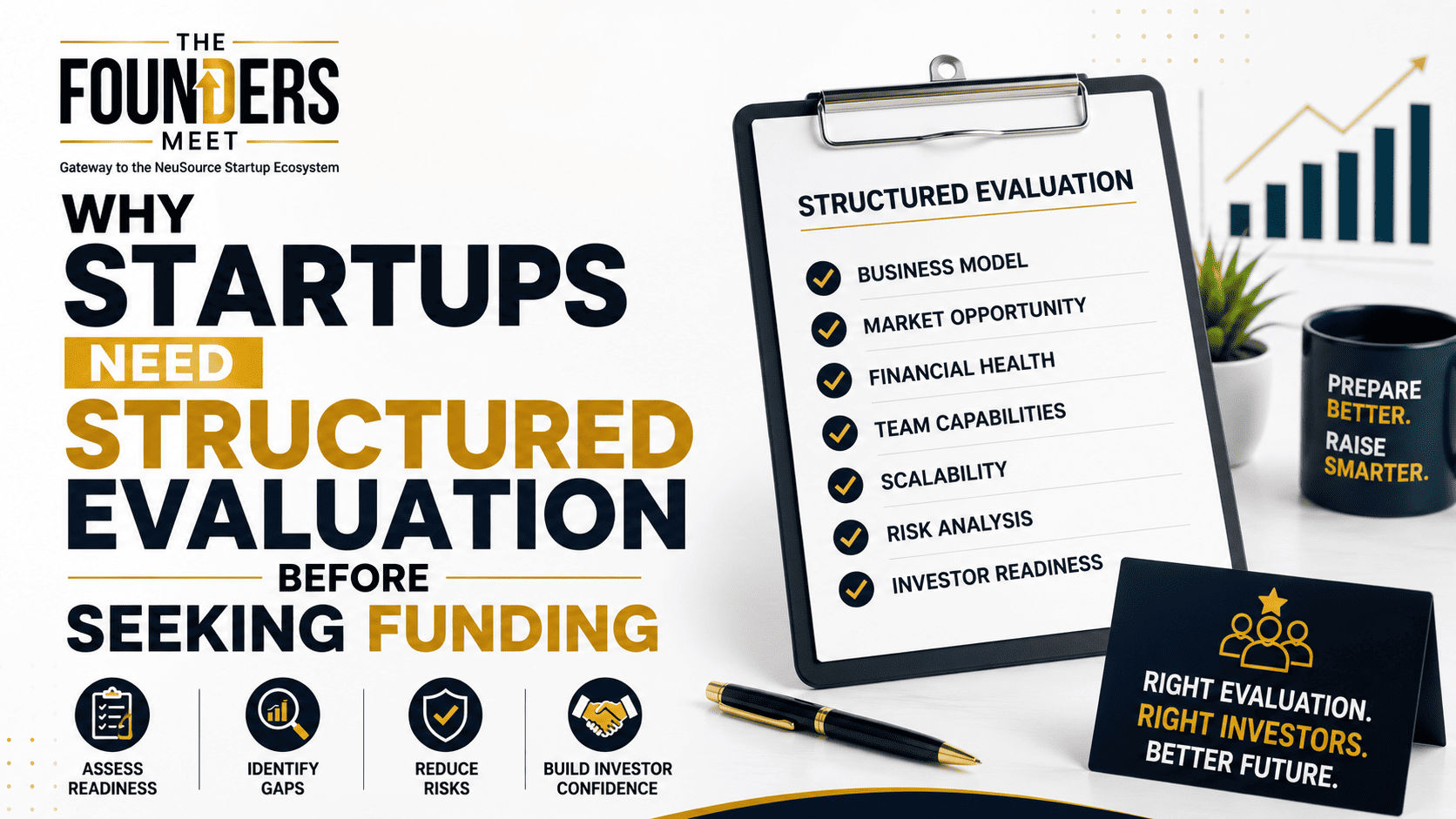
Structured evaluation is a systematic assessment of a startup’s readiness for funding. It includes:
This approach ensures that founders address gaps before approaching investors.
Investors are more likely to fund startups that demonstrate clarity and preparation. A structured evaluation provides measurable data and evidence, which helps investors trust the startup’s potential.
By evaluating critical aspects like product-market fit, revenue model, and team execution capability, founders can identify and fix weaknesses before they become deal-breakers.
Structured evaluation helps in refining the pitch. Founders can communicate the value proposition, traction, and market opportunity clearly, leading to more engaging and persuasive presentations.
Startups that undergo structured evaluation are significantly more likely to secure funding. Investors respond positively when founders demonstrate preparation, metrics, and strategic thinking.
Structured evaluation in these areas increases credibility and significantly improves chances of investment.
Programs like Founder Meet by NeuSource provide startups with an opportunity to:
Such platforms reduce uncertainty and help founders present a well-evaluated, fundable startup to investors.
Structured evaluation is not optional—it is essential for any startup seeking funding. It ensures that startups are investor-ready, reduces the risk of rejection, and builds confidence in the eyes of investors. By systematically assessing market fit, team strength, financials, and legal readiness, founders increase their chances of securing the funding needed to scale successfully.
Join the next Founder Meet to evaluate your startup, gain mentor insights, and improve your chances of investment success! ??