Building a startup requires more than just a great idea. Many founders successfully identify problems, create solutions, and launch products, but scaling a business requires resources, strategic guidance, and access to the right opportunities.
This is where startup funding becomes important.
However, finding investors for a startup in India is not simply about sending pitch decks to hundreds of investors or asking for money. Successful fundraising depends on understanding investor expectations, building meaningful relationships, preparing your startup properly, and connecting with investors who align with your vision.
India has one of the fastest-growing startup ecosystems in the world, with angel investors, venture capital firms, startup communities, accelerators, and founder networks supporting entrepreneurs across industries.
In this guide, we will explore how founders can find investors for their startups in India, where to connect with investors, how to prepare before fundraising, and the mistakes entrepreneurs should avoid during their funding journey.
Many founders believe fundraising is only about securing capital. But the right investor brings much more than money.
A strategic investor can help startups with:
The wrong investor, however, can create challenges due to differences in expectations, growth strategies, and business decisions.
Therefore, founders should focus on finding the right investor rather than finding any investor.
Before searching for investors, founders must understand the different funding sources available based on their startup stage.
Angel investors are individuals who invest their personal capital into early-stage startups. They usually invest based on the founder's vision, business potential, market opportunity, and growth possibilities.
Angel investors are valuable for early-stage startups because many of them provide strategic advice along with funding.
Suitable for:
Venture capital firms invest in startups that demonstrate strong growth potential and scalability.
VC investors generally evaluate:
Venture capital funding is generally suitable for startups that have achieved some level of market validation.
Accelerators and incubators help startups grow by providing mentorship, business support, training programs, and investor connections.
They are especially useful for founders who need guidance in improving their business model and fundraising preparation.
Corporate investors invest in startups that align with their strategic interests.
They can provide:
Government initiatives provide support through grants, startup programs, and incubation opportunities for eligible businesses.
Finding investors requires founders to actively participate in the startup ecosystem and build visibility.
Startup networking events are one of the most effective ways to connect with investors, mentors, and experienced entrepreneurs.
These events allow founders to:
Unlike cold outreach, startup events create opportunities for meaningful conversations and trust-building.
Founder communities connect entrepreneurs with investors, mentors, and other startup leaders.
Being part of an active startup community helps founders discover:
LinkedIn has become one of the most powerful platforms for founder-investor networking.
Founders can use LinkedIn to:
Pitch events provide startups with opportunities to present their businesses directly to investors.
Benefits include:
Accelerator programs provide structured support through mentorship, training, and investor introductions.
Finding investors is only one part of fundraising. Before approaching investors, founders must ensure their startup is prepared.
A pitch deck is often the first impression investors receive about your startup.
A strong pitch deck should include:
Investors make decisions based on data and business potential.
Founders should understand:
Investors prefer startups that have evidence of market demand.
Market validation can include:
Founders should have clarity about:
Investors invest in founders as much as they invest in ideas.
Your story should explain:
Founders should identify investors who match their startup stage, industry, and funding requirements.
Research:
Successful fundraising usually starts with relationships before funding discussions.
Founders should focus on:
Introductions through founders, mentors, and startup communities can improve the chances of getting investor attention.
Building investor relationships becomes easier when founders have access to the right startup ecosystem.
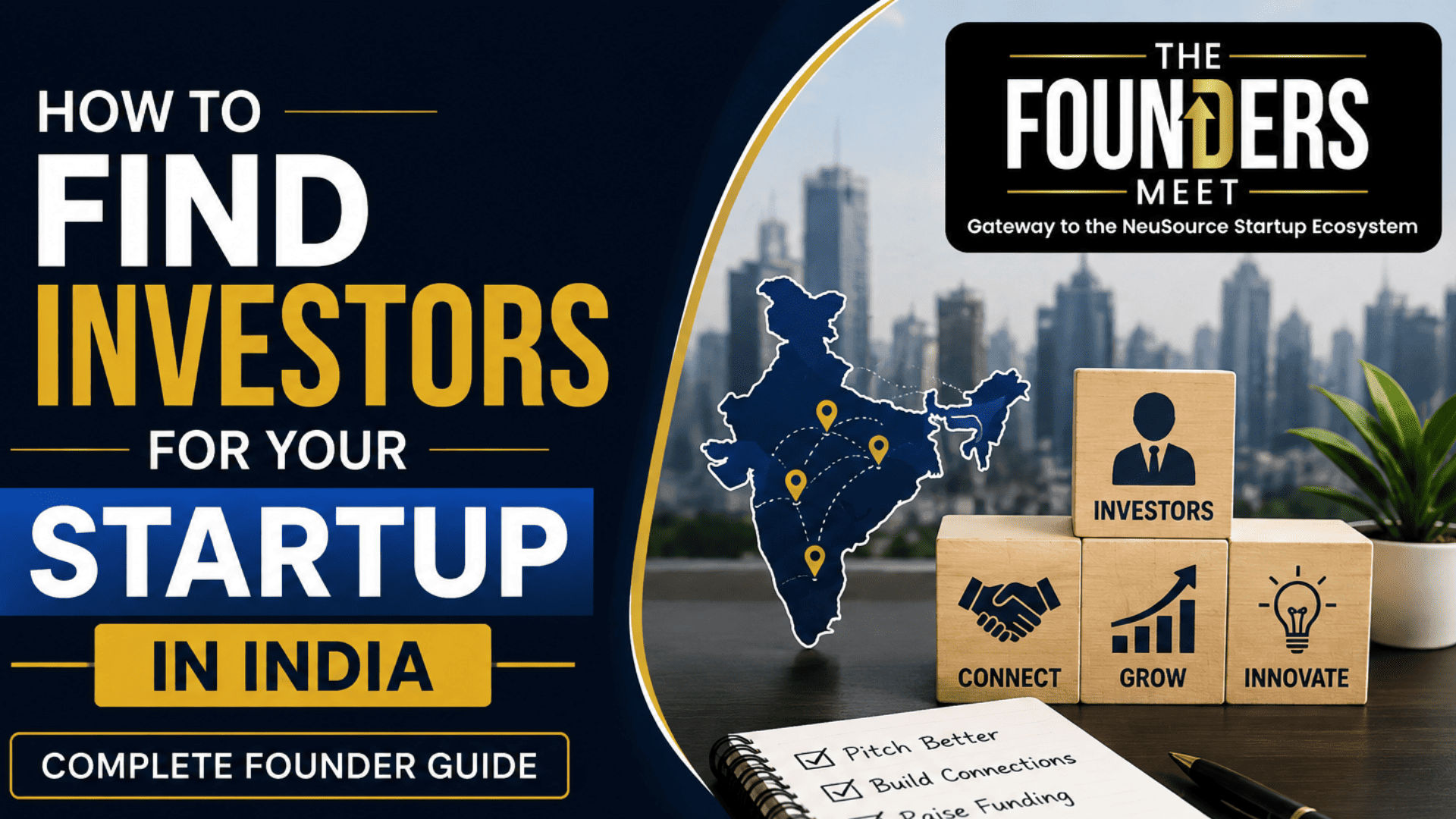
The Founders Meet by NeuSource World creates opportunities for entrepreneurs to connect with investors, mentors, and fellow founders.
Through startup pitching sessions, investor interactions, and mentorship opportunities, founders can:
Finding investors for a startup in India is not only about searching for people who can provide capital. It is about building relationships, preparing your business, and connecting with investors who believe in your vision.
The right investor can become a long-term growth partner by providing strategic guidance, industry connections, and valuable support.
For founders looking to raise funds, the journey should begin with becoming investor-ready, building the right network, and actively participating in the startup ecosystem.