Every successful startup begins with an idea, but not every idea becomes a successful business. While innovation, determination, and execution are essential, many founders underestimate one of the most valuable assets in entrepreneurship—mentorship.
Building a startup involves making hundreds of critical decisions, from validating a business idea and finding the right market to raising funds, hiring talent, and scaling operations. For first-time founders, these decisions often come with uncertainty and risk. Even experienced entrepreneurs can face challenges that require fresh perspectives and industry expertise.
This is where mentorship becomes a game-changer.
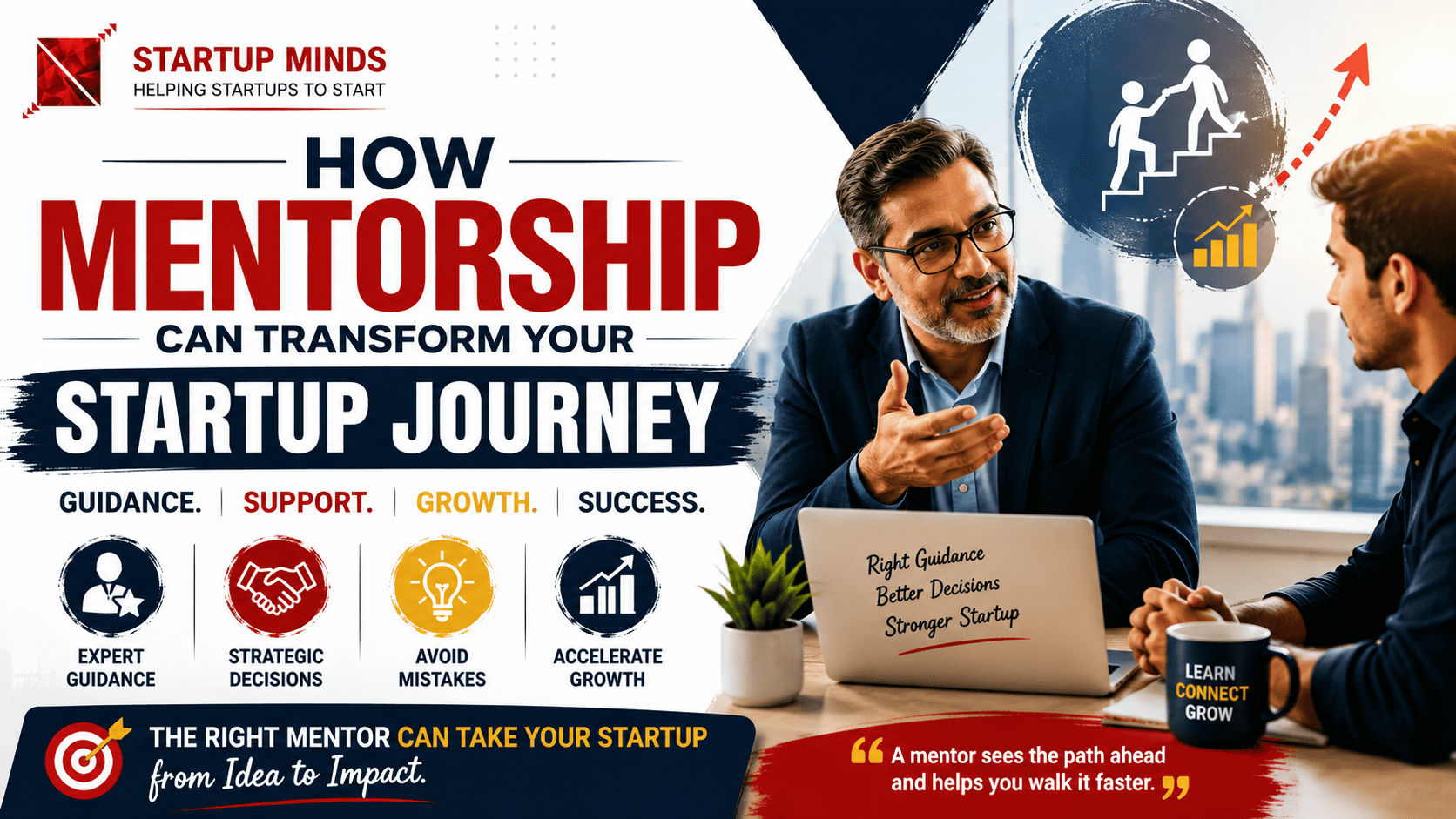
A mentor is more than an advisor. They are someone who has walked a similar path, experienced the highs and lows of entrepreneurship, and can help founders make informed decisions while avoiding common mistakes. Instead of learning every lesson through trial and error, startups can leverage the experience of seasoned entrepreneurs to accelerate growth and build stronger businesses.
In this blog, we'll explore why mentorship is essential for startups, how it influences long-term success, and how founders can find the right mentors to support their entrepreneurial journey.
Starting a business is exciting, but it also comes with countless unknowns. Founders often wear multiple hats, acting as CEO, marketer, salesperson, recruiter, and strategist—all at the same time.
Without proper guidance, it's easy to lose focus or make costly mistakes.
A mentor helps founders navigate these challenges by providing practical advice based on real-world experience. Rather than offering theoretical concepts, mentors share insights gained from building businesses, overcoming failures, and adapting to changing market conditions.
Having someone to discuss ideas with, challenge assumptions, and provide honest feedback can significantly improve a startup's decision-making process.
One of the greatest advantages of mentorship is learning from someone who has already faced similar challenges.
Mentors can help founders:
Learning from experience often accelerates progress and reduces unnecessary setbacks.
Every startup faces important decisions related to pricing, hiring, fundraising, product development, partnerships, and expansion.
A mentor brings an objective perspective that helps founders evaluate different options before making critical business decisions.
This guidance reduces uncertainty and improves confidence during periods of growth.
Networking is one of the biggest advantages experienced mentors offer.
Many mentors have built strong professional relationships with:
These introductions can open doors that would otherwise take years to build independently.
Raising funds requires more than having a great idea.
Investors look for startups that demonstrate:
Mentors help founders refine their pitch, strengthen business strategy, and prepare for investor meetings with greater confidence.
Building a startup also means becoming an effective leader.
As teams grow, founders must learn to:
Experienced mentors help founders develop these leadership qualities over time.
Every startup faces obstacles, regardless of industry or stage.
Understanding customer needs and validating market demand before scaling.
Hiring people who align with the startup's vision and culture.
Developing effective marketing and sales strategies.
Preparing financial projections, investor presentations, and valuation discussions.
Scaling operations while maintaining quality and customer satisfaction.
Instead of reacting to problems, founders learn to anticipate them through experienced guidance.
Choosing a mentor should be a thoughtful process.
Rather than seeking the most famous entrepreneur, founders should look for someone whose experience aligns with their business goals.
A good mentor should:
The best mentor isn't someone who gives all the answers—it's someone who asks the right questions.
Mentorship is a two-way relationship built on trust and mutual respect.
To get the most value from mentorship:
Consistency is key. Long-term mentor relationships often create lasting professional partnerships.
While individual mentors are invaluable, founders benefit even more when they become part of a startup ecosystem.
A startup ecosystem connects entrepreneurs with multiple mentors, investors, industry experts, fellow founders, and learning opportunities under one collaborative platform.
Rather than depending on a single mentor, founders gain access to diverse perspectives that help them solve different business challenges.
Startup ecosystems also encourage peer learning, where entrepreneurs learn from each other's experiences while building meaningful professional relationships.
Mentorship becomes even more effective when combined with networking, learning, and ecosystem support.
NeuSource World is building a collaborative startup ecosystem where founders can interact with experienced entrepreneurs, mentors, investors, and industry experts through various initiatives.
Programs such as The Founders Meet encourage meaningful networking and knowledge sharing, while The Founder Show provides entrepreneurs with opportunities to showcase their businesses and receive valuable feedback. Through Founders Bootcamp, founders gain practical business insights, and The Founders Talk shares real entrepreneurial experiences from successful founders and business leaders.
Together, these initiatives create an environment where mentorship extends beyond one-on-one conversations and becomes part of a larger community focused on continuous learning and startup growth.
No founder succeeds entirely alone.
Behind every successful startup is a network of mentors, advisors, supporters, and industry experts who provide guidance during critical moments.
Mentorship doesn't eliminate challenges, but it helps founders approach those challenges with greater clarity, confidence, and strategic thinking. Whether you're launching your first startup or preparing to scale an existing business, learning from experienced entrepreneurs can save time, reduce costly mistakes, and unlock new opportunities.
As India's startup ecosystem continues to evolve, founders who actively seek mentorship and become part of collaborative startup communities will be better positioned to build resilient businesses and achieve sustainable growth.